

Rice is more than food in Southeast Asia; it is life, culture, and family. Every meal feels complete only when a warm bowl of white rice is on the table. However, in recent years, scientists and doctors have been talking about how eating too much white rice might be linked to health problems like type 2 diabetes.
Do you have to give up your favorite food? The short answer is no. Science does not say “stop eating rice.” Instead, it shows us how to be smart about how much we eat and what we eat with it. Here is a simple guide, based on real scientific studies, to help you enjoy your rice and stay healthy.
1. The Science: Why White Rice is Different
Our bodies need energy, and carbs (carbohydrates) are the main source. Rice is full of carbs. When you eat white rice, your body quickly turns it into sugar (glucose), which enters your blood.
Scientists use a tool called the Glycemic Index (GI) to measure how fast a food boosts your blood sugar:
- High GI foods (like white rice): make blood sugar go up very fast.
- Low GI foods: make blood sugar rise slowly and steadily.
Scientific Basis: White rice intake and risk of type 2 diabetes: meta-analysis and systematic review. (A major study confirmed that people who ate the most white rice had a higher risk of developing type 2 diabetes.)
Read the study summary here (BMJ)
2. The Solution: Three Steps to Smarter Rice Eating
You don’t need to quit rice. You just need a new strategy. Think of it as upgrading your meal.
Step 1: Change Your Plate Size (Portion Control)
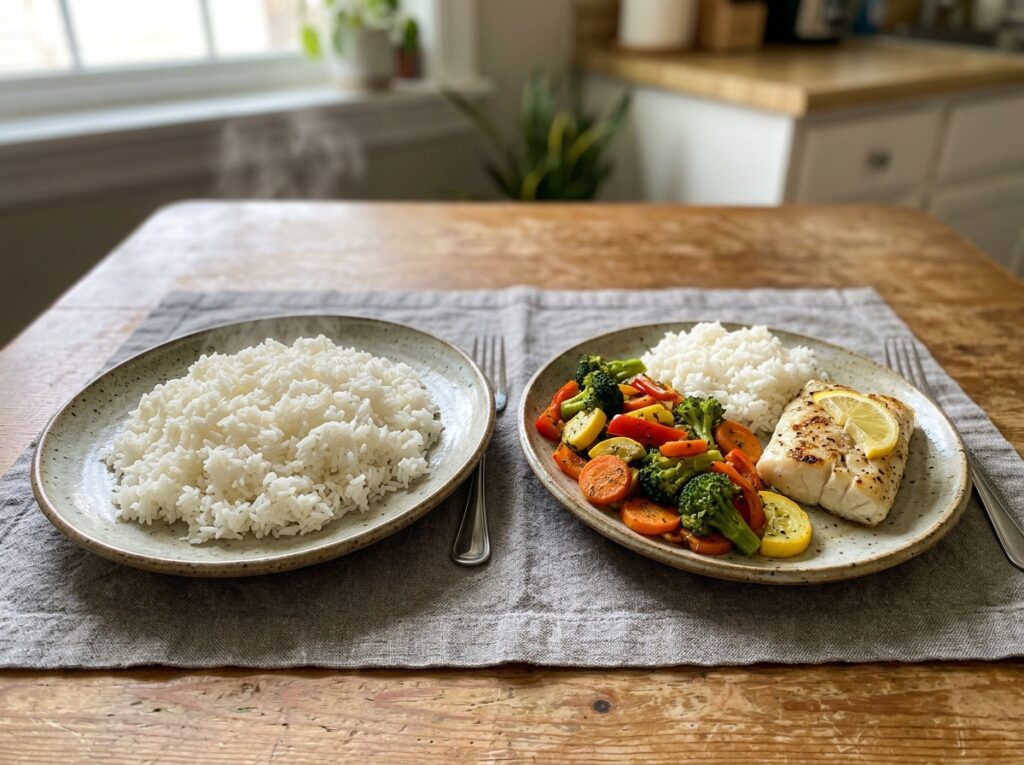
The simplest step is to reduce the amount of rice on your plate. If your plate was 100% rice, try making it 25%. Fill the empty space with other healthy options.
Step 2: Choose Better Partners (Add Fiber and Protein)
Fiber and protein are like “speed bumps” for sugar. They slow down how fast your body absorbs sugar from the rice.
- Fiber: Eat lots of vegetables (morning glory, bok choy, green beans).
- Protein: Add fish, chicken, tofu, or eggs to your meal.
Step 3: Try New Colors (Change the Type of Rice)
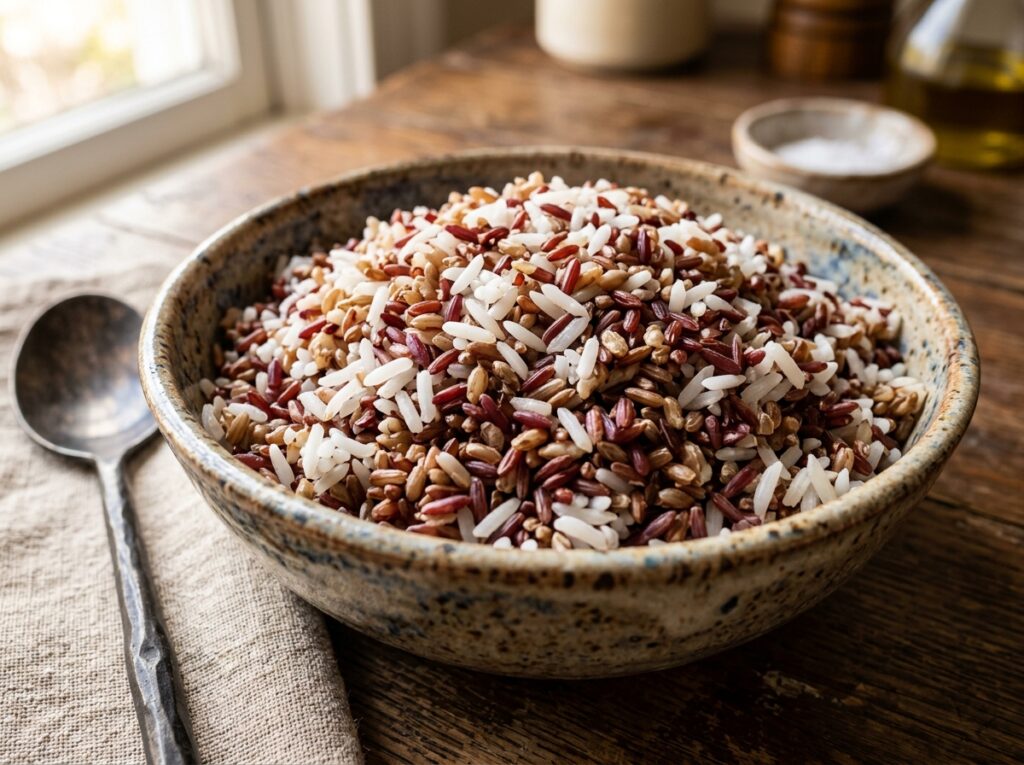
White rice is “polished,” meaning healthy layers are removed. Brown, red, and black rice still have these layers. They have a lower GI and more nutrients. Try mixing them with your white rice at first!
Conclusion: A Healthy Future
You are in control of your health. By following these three simple, scientifically-proven steps, you can protect your health while enjoying the meals you love. Start today by adding more color and balance to your next bowl of rice.